
More paint testing
And the curse of the little white balls

I’ve been testing quite a few variables for milk paint, with the primary one being which of my local milk suppliers has the best quark yield from their skim milk1.
These test batches of quark are perfect for making sample sticks for all my newly acquired pigments.
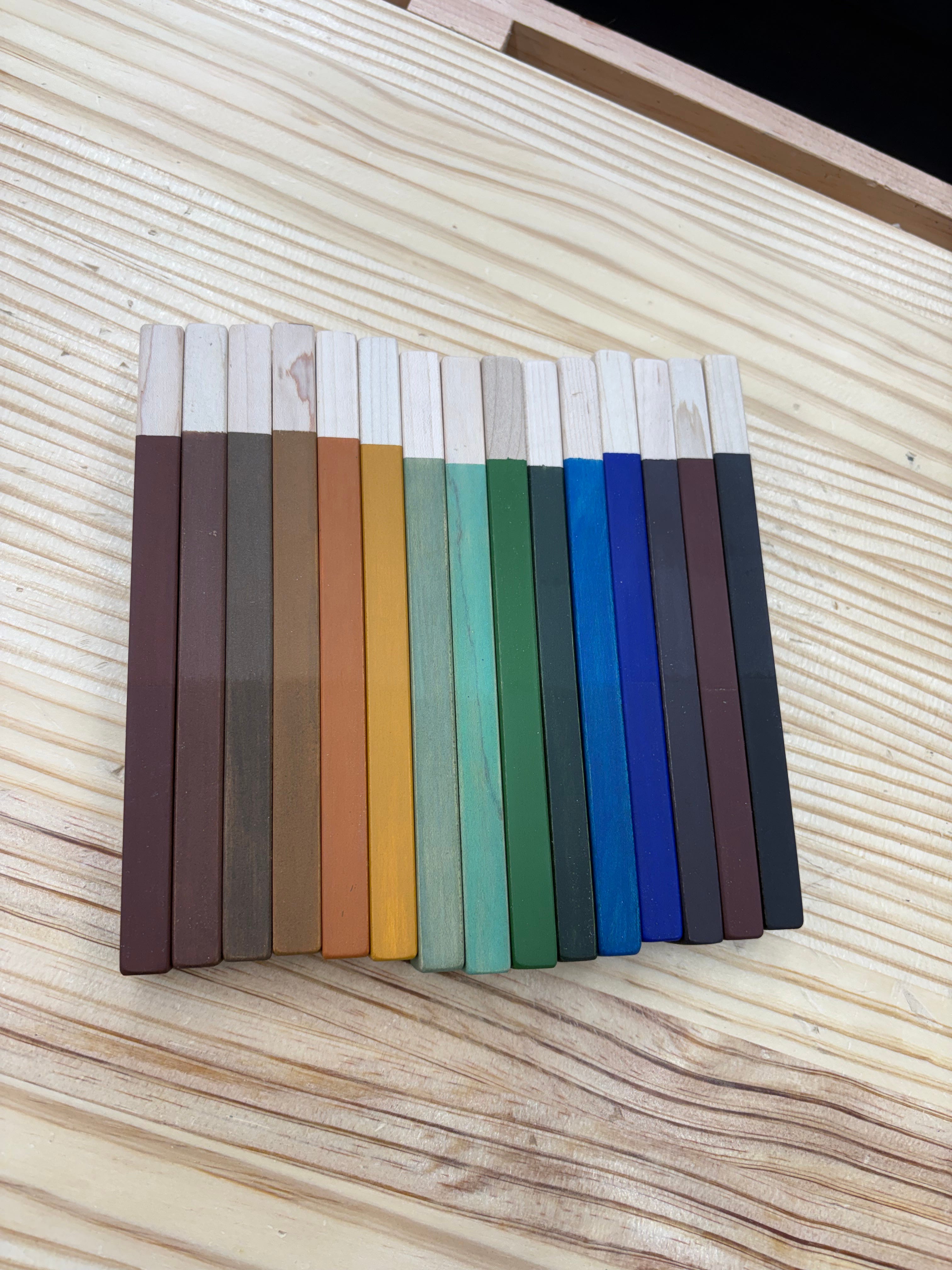
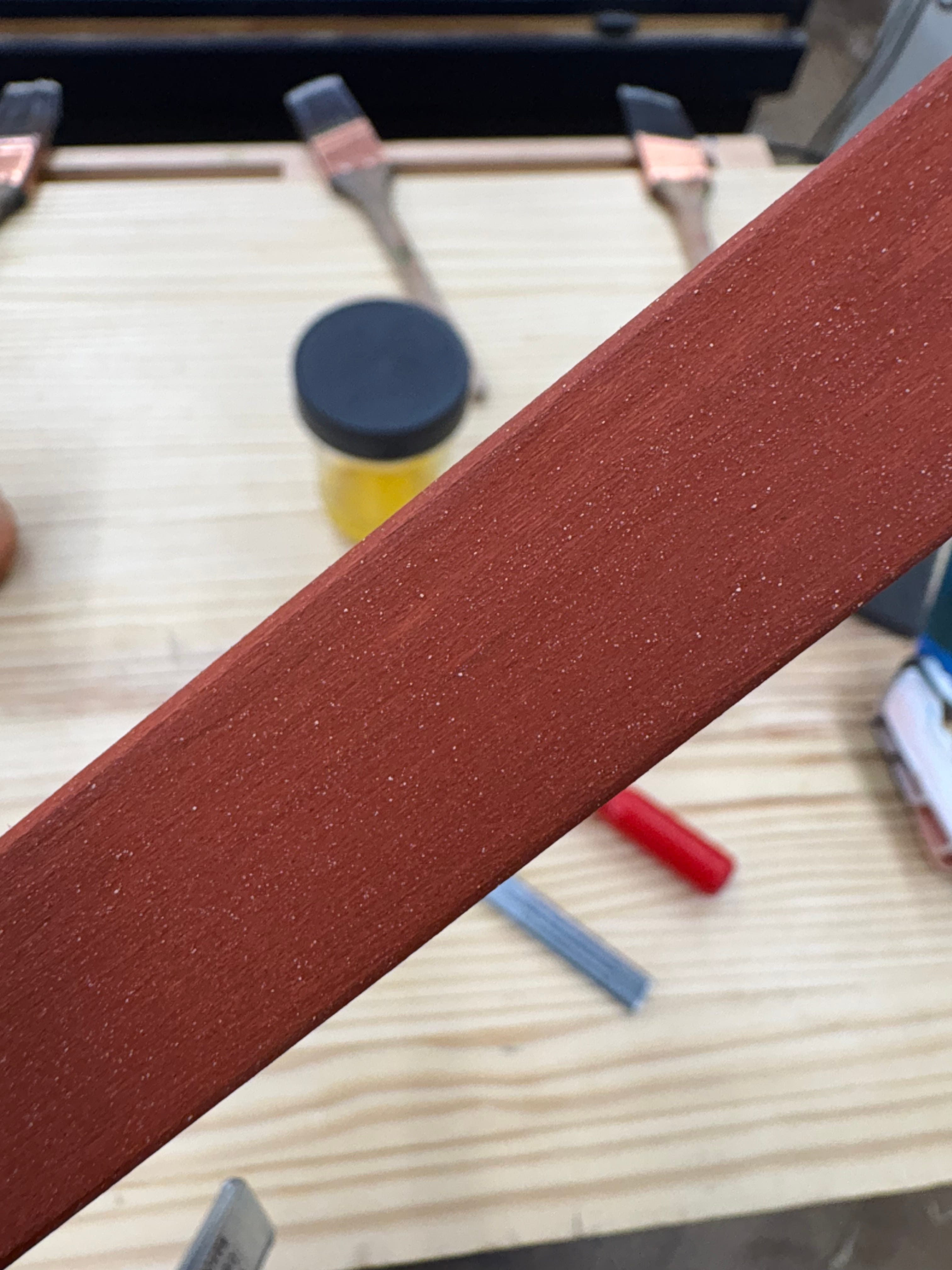
I made a batch recently and was still plagued with the white balls (mentioned in this post).
This was around the same time Nick Kroll shared a live stream where he replicated the problem and discussed a few solutions. It’s a great source of info and well worth a watch.
Summary: the white balls are basically solidified lime. His comments confirmed a theory I had regarding why I was only having this issue recently vs when I first started making paint: I swapped from Cal from the local Mexican food mart to a slaked lime from Ace. The Ace lime is not as fine as the Cal, likey containing more lumps.


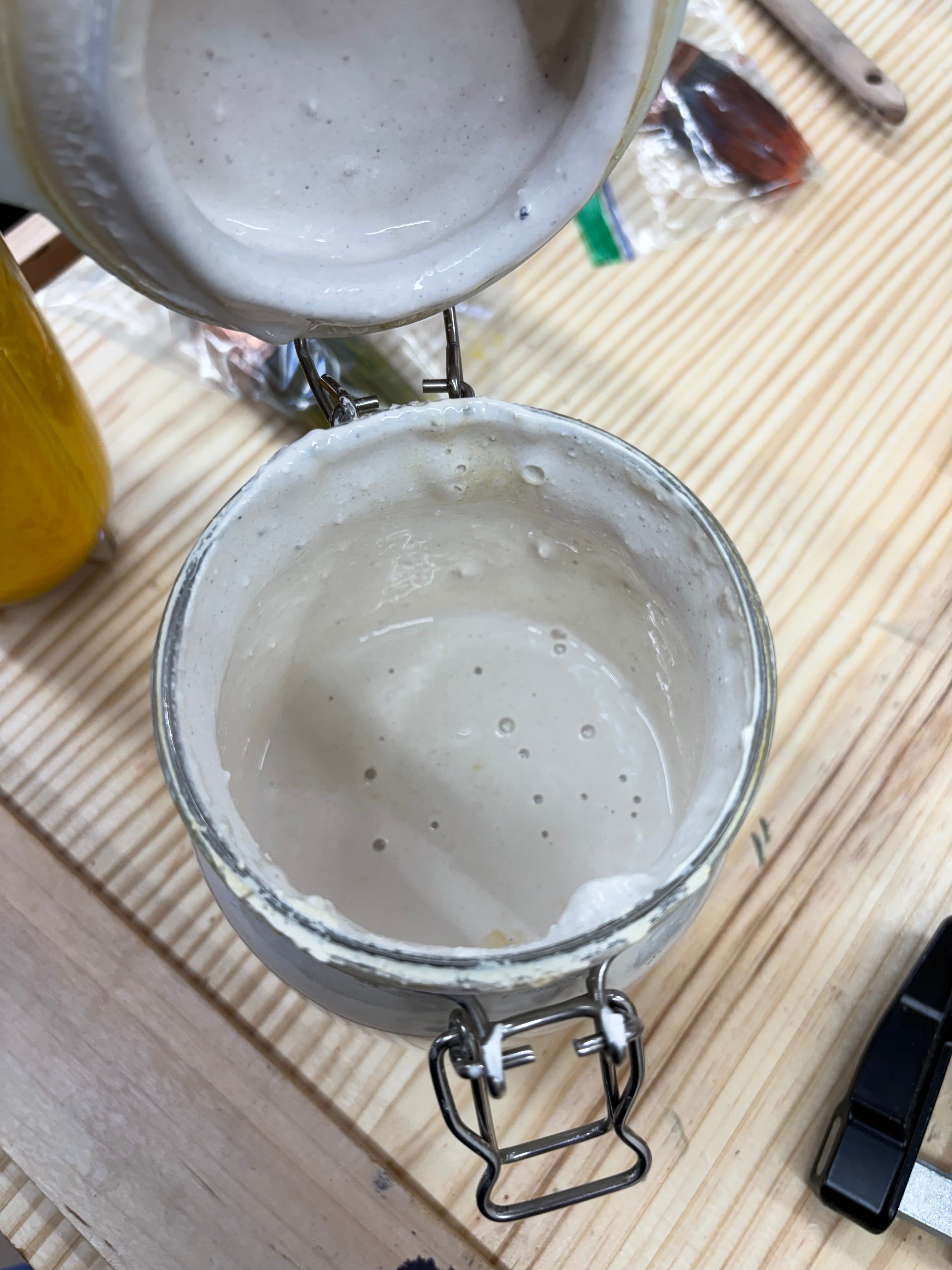
I tried straining the paint with a tea strainer, and that removed a lot of them, but not all. His other suggestion was to pre-slake the lime and just leave it in water for as long as possible to help break it all down. I mixed up enough lime and water for 6 full size batches of paint and I’ll test it out in the near future. Important note for anyone doing this: slaking lime is an exothermic reaction. When slaking 180g of lime, it got HOT. Not so hot that it burned me, but definitely way hotter than I thought it would.
To fully test the theory, I went back to La Perla and stocked up on Cal and re-made a batch of base. This paint had zero white balls present.
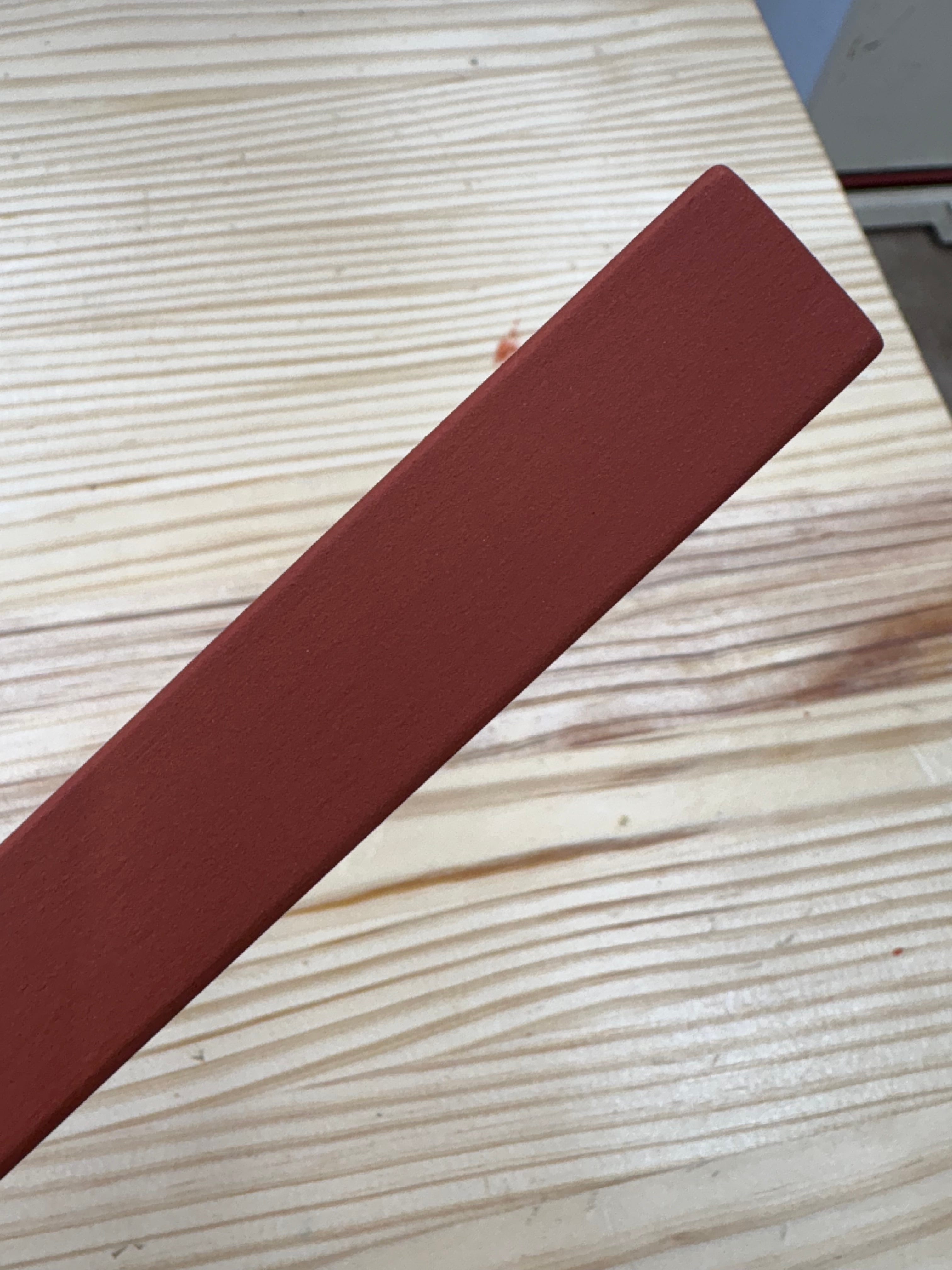
There might be some confirmation bias in this but the paint also “felt” better while applying it. I know it sounds weird, but one thing that’s really drawn me to milk paint, outside of the fact it’s a hand made item with no plastic, was the feel of the paint while painting it on. Maybe it’s just me, but it’s completely different than acrylics and has a nicer haptic feedback.
I know I’ve had a lot of paint posts lately but I’m still on the portion of the learning curve that I find the most enjoyable, so thanks for reading. I’m slowly acquiring some carving tools and hope to head down that path soon enough (on top of making more chairs/furniture), so I’ll be sharing more about that as I go.
Next week is spring break, so there will be a small break in posts.
I live in Oklahoma so almost all the milk I can easily find is from highland dairy. I recently tested Trader Joe’s and Braun’s skim milk, with the latter being A2, and their yields were a little worse than the highland.
Great experiments and write-up!
Also, very odd you're getting heat. . . a chemistry person should jump in here but calcium hydroxide (hydrated lime) is already "slaked" in a lime sense (initial slaking of quicklime is intensely exothermic, per memories of an evacuated 6th grade science class). . . does your cal mexicana heat up? Gonna test some of mine now.
I agree 1000% about the haptics when the texture is right, it's like magic to apply.
Dang wonder what would happen if I used a mortar and pestle or a microfine mesh sieve to process the lime first… gotta find that cal stuff!